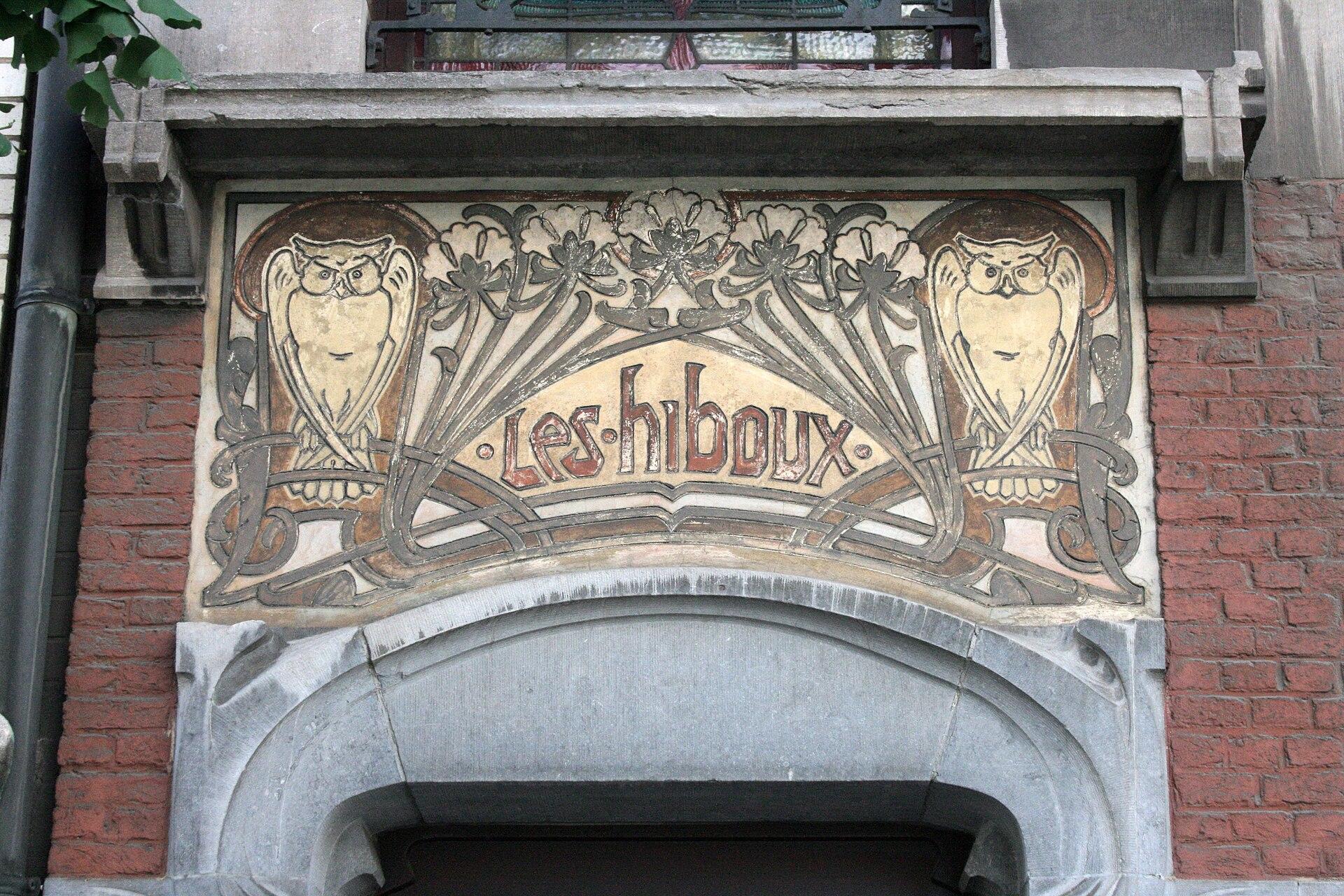
Avenue de la Jonction 1 · Saint-Gilles
Maison Hannon: One Art Nouveau Building, for a Friend
- Place
- Maison Hannon
- Architects
- Jules Brunfaut
- Built
- 1902–1904
- Status
- Listed monument
Jules Brunfaut designed only one Art Nouveau house. He drew it for a childhood friend, Édouard Hannon, an engineer at Solvay, who loved the style and asked him for it.
Hannon has another passion: photography. In 1894, at the first exhibition of the Photo-Club de Paris, his Matinée d’automne won the gold medal, and he is counted among the pioneers of pictorialism in Belgium. When he and his wife had a house built in Saint-Gilles, they knew what they wanted. Brunfaut, who usually builds differently, followed them.
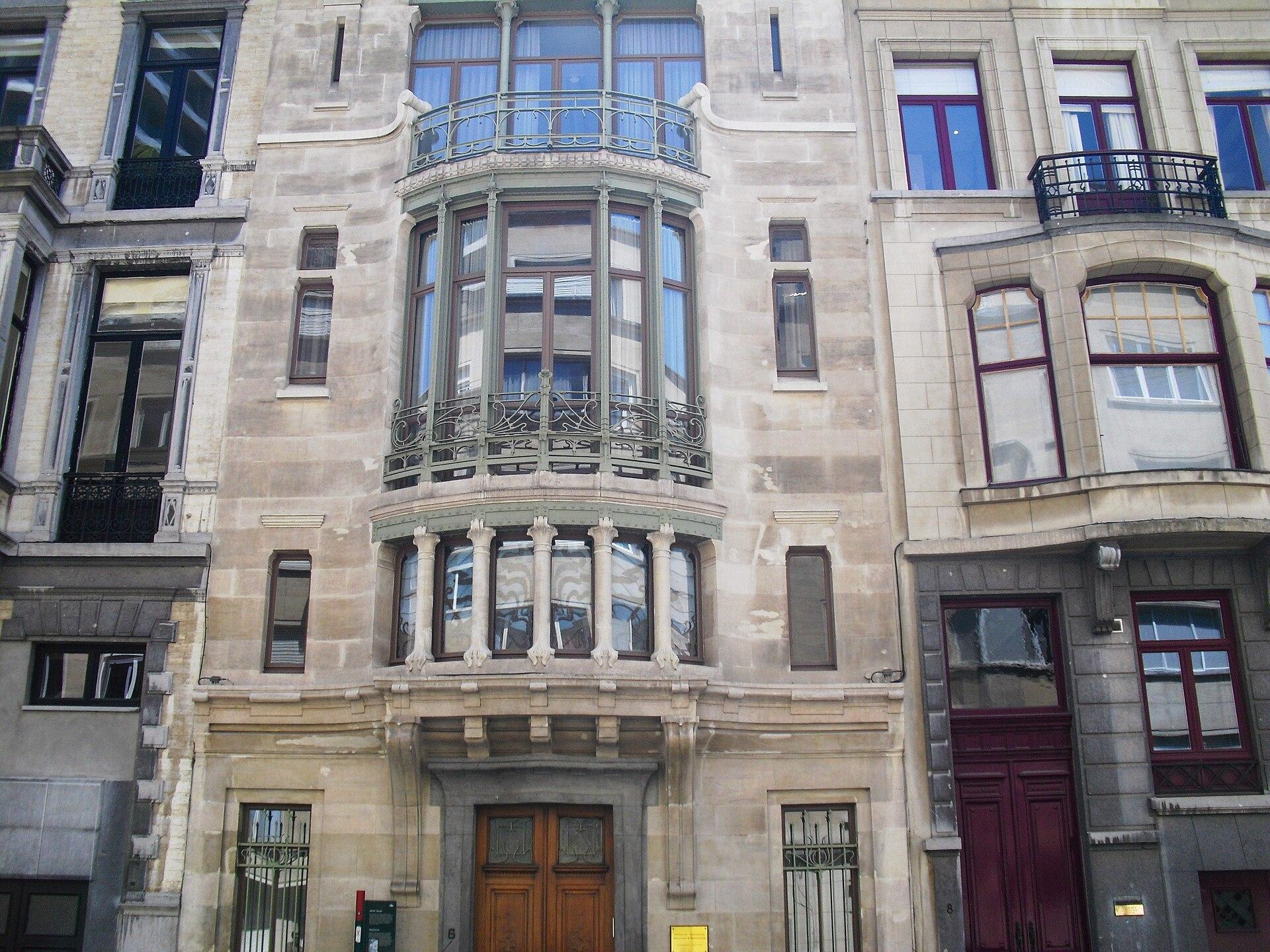
It all comes down to the corner. The façade is light, white Silesian brick and Euville stone, set off with Belgian blue limestone; on the side, the dark bow window of the winter garden juts out. The corner itself unfolds into three bays. A wrought-iron balcony clings to it, carried on stone scrolls. At the very top, under the broken pediment, Victor Rousseau sculpted a spinner: her dress caught in the wind, her distaff raised beneath a branch. She represents Time.
Past the door, the hall floor is strewn with holly leaves in mosaic. The mahogany staircase turns, and the walls of its stairwell open onto a painted sea. Paul-Albert Baudouin, a painter from Rouen, placed a young man there, consoled by his muse, facing the open sea among olive and laurel trees. In the sky, young women dressed in veils fly off with their lyre.
Glass takes over from painting. In the winter garden, mauve and yellow plants ripple in the stained glass. Upstairs, the dressing room gets its daylight through three windows: garlands of blue flowers hang there above large golden loops. Only fragments of this stained glass survived; it was reconstructed from them.
For Time, as the spinner embodies it, has not spared the house. In 1904, Émile Gallé had delivered vases, light fixtures and furniture designed for the house, on the theme of umbels: they were scattered. After the death of the Hannons’ daughter, the house stood empty, vandalized, threatened with demolition. The municipality of Saint-Gilles bought it in 1979. A photography space, Contretype, later moved in and prompted a rediscovery of Édouard Hannon’s images. The house is now a museum.
Photos : Pulcherus (source), CC0 ; Donarreiskoffer (source), CC BY 4.0 · Wikimedia Commons