Rue du Sergent-Blandan 36-38 · Nancy
Musée de l’École de Nancy: a collector’s pied-à-terre
- Place
- Musée de l’École de Nancy
- Architects
- Lucien Weissenburger
- Built
- Extended in 1911–1912
- Status
- Park and aquarium inscribed as monuments historiques
At first, it was only a pied-à-terre. In 1904, Eugène Corbin, son of the founder of the Magasins Réunis, rents a seven-room house in Nancy.
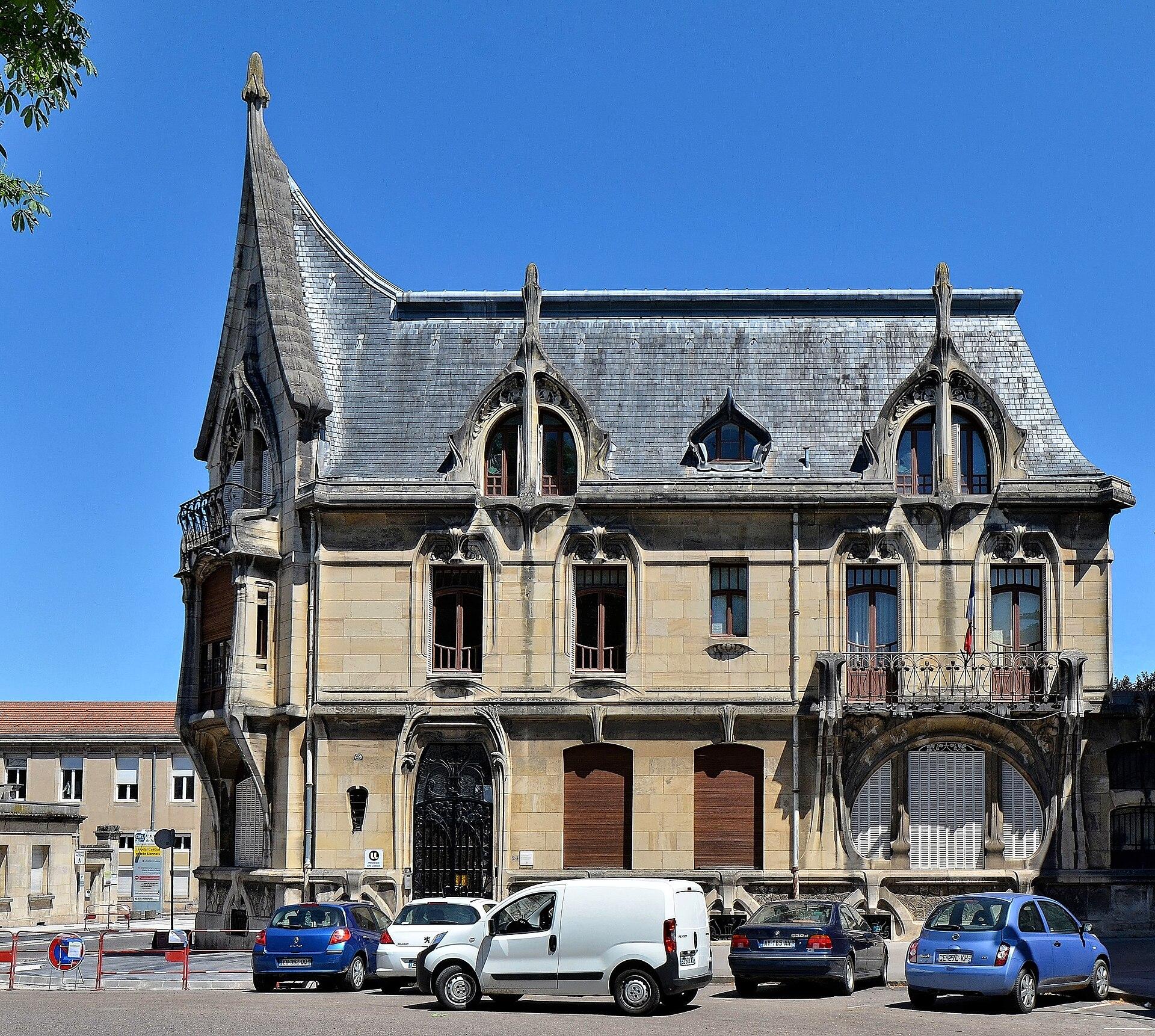
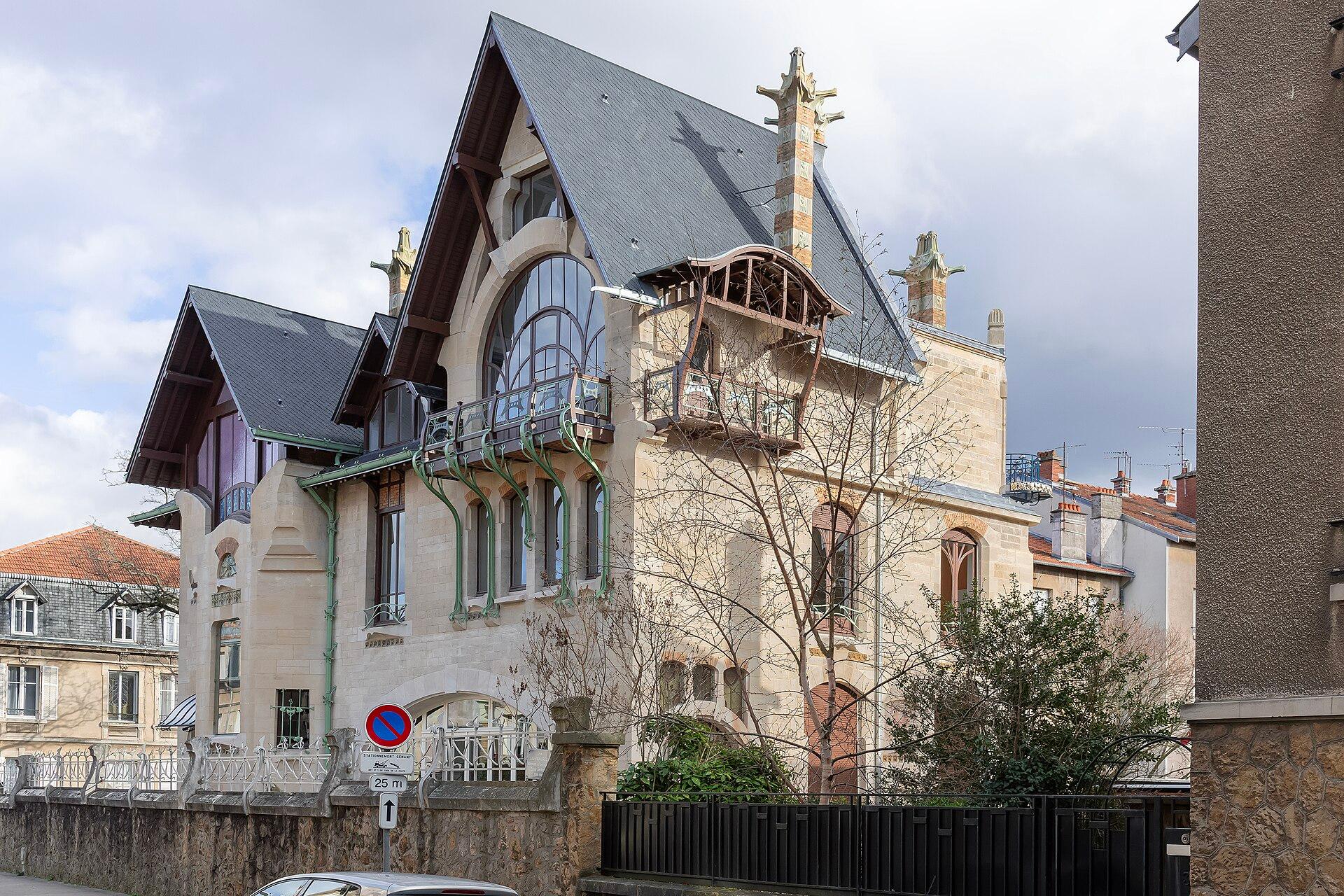
The pied-à-terre did not stay small. A few years later, the architect Lucien Weissenburger added two wings to it, and the house changed in scale. The restored façade reads like a fabric: brick and blue ceramic cross in a grid under a tile roof.
The park has its own whimsy: an aquarium. Weissenburger probably imagined it as soon as Corbin arrived. It is a round stone pavilion pierced with arched openings. At the top, a belvedere shelters under a glass umbrella.
A spiral staircase fills the middle of the pavilion. Daylight comes in through the upper part of the openings, through stained glass. Jacques Gruber had designed the original panes. Those stained-glass windows have been taken down; the museum keeps them.
Corbin collected his contemporaries. In 1935, he gave the City 759 pieces, signed by the leading artists of the École de Nancy. After the war, the collection stayed in crates. The City finally bought Corbin’s property, a few months before his death. The museum first opened there one day a week; enlarged, it was inaugurated in 1964. It holds more than four hundred glass pieces by Émile Gallé.
Gallé also has his door in the garden. Eugène Vallin carved it in oak for the glassmaker’s workshops; it has been there since the inauguration. In the wood, carved capital letters begin a sentence: “Ma racine est au…” (“My root is in the…”) The full motto reads: “Ma racine est au fond des bois.” (“My root is deep in the woods.”)
The park still holds an Art Nouveau funerary chapel, reassembled among its trees. Park and aquarium are inscribed as monuments historiques. The seven-room pied-à-terre is today a Musée de France.
Photos : Léna (1, 2), CC BY 3.0 ; Léna (1, 2), CC BY-SA 3.0 · Wikimedia Commons