Rue Africaine 92 · Saint-Gilles
Rue Africaine 92: Art Nouveau in the Details
- Place
- Maison de Lestre
- Architects
- Benjamin de Lestré de Fabribeckers
- Built
- 1904
- Status
- Listed monument
At Rue Africaine 92, one detail can easily escape a passerby: a signature carved almost at ground level, “de Lestré / Archte” (“de Lestré / Architect”). The architect Benjamin de Lestré de Fabribeckers left his name where people rarely look. His façade deserves the same attention to quiet things. From a distance it seems restrained; up close, it reveals a meticulous design.
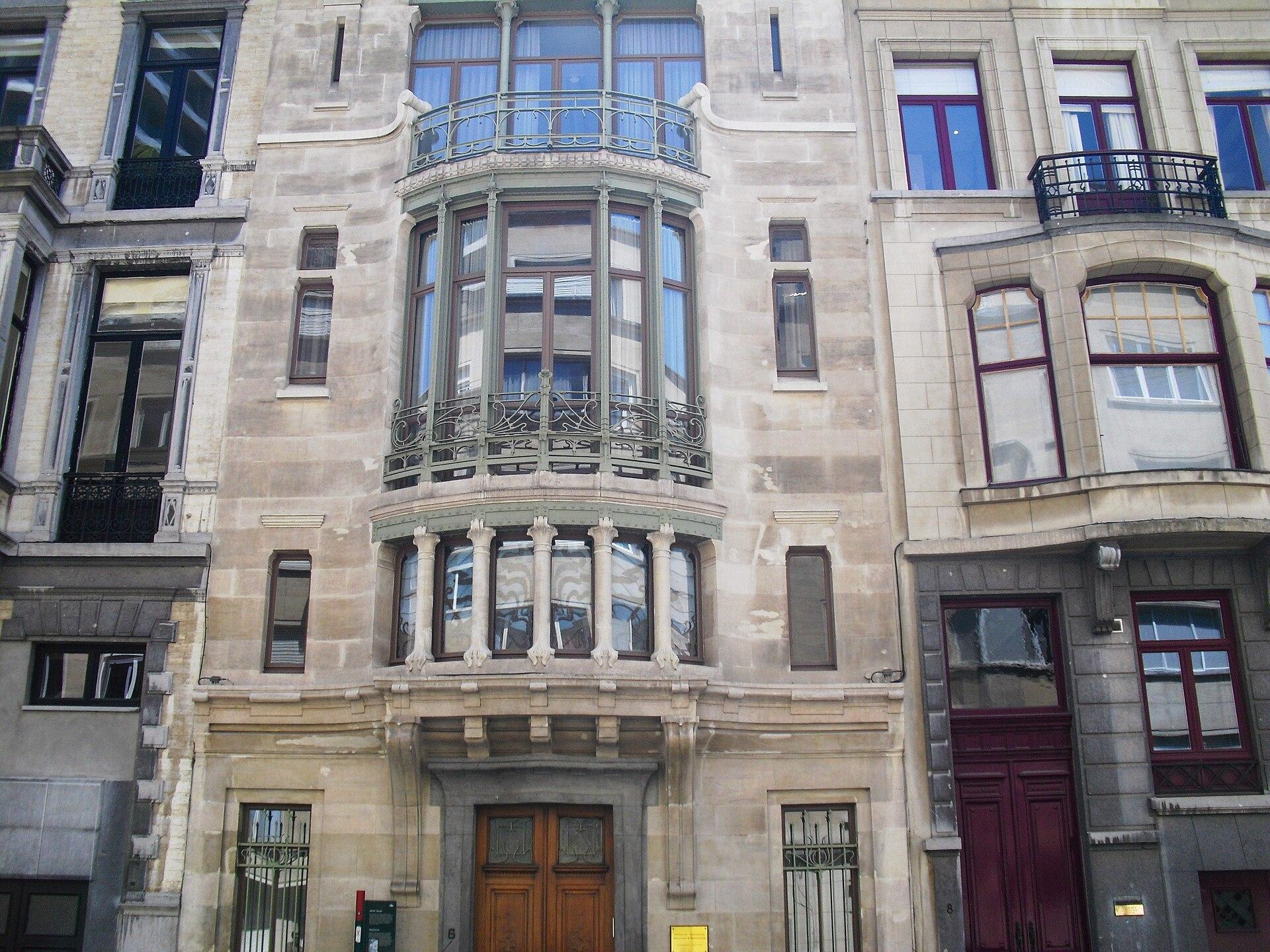
The plans date from 1904. De Lestré chose a geometric Art Nouveau, far from the lush lines people instinctively associate with the style. The house rises four stories. Light brick, white stone, blue stone and metal make up a restrained palette. No single element is made to carry the whole effect: it is their repetition that gives the ensemble its coherence.
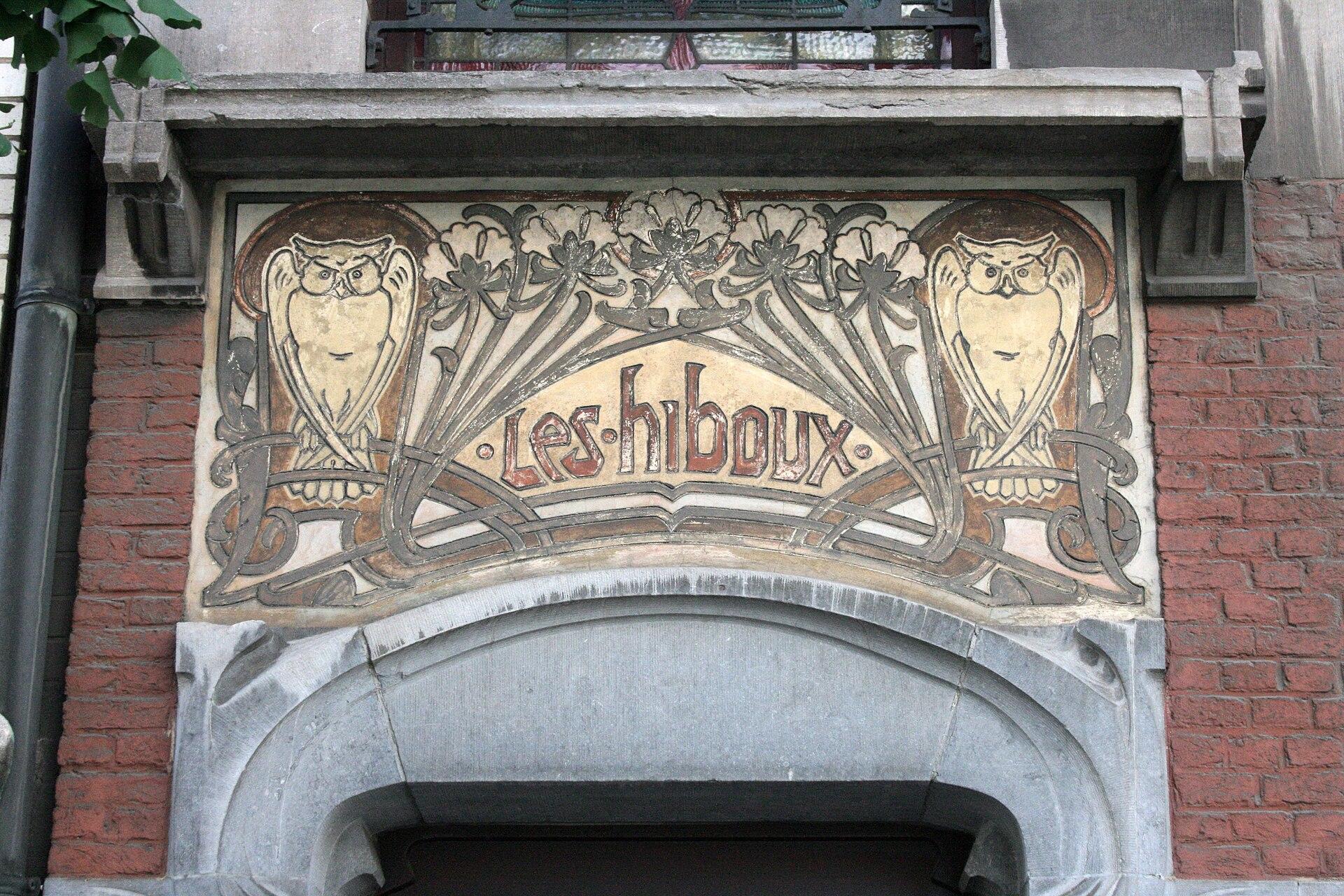
Look, for example, at the motif of circles combined with stylized stems. It passes from the stone to the ironwork without losing its identity. Higher up, a rounded bow window projects over the street, while balconies, arches and cornice take up a play of measured curves. The same family of forms returns on different floors and in several materials. This unity is more noticeable on a second look than at first glance.
The interior, however, does not speak the same language. The salon draws on Flemish Neo-Renaissance taste: coffered ceiling, red marble fireplace, Cordoba leather effects. Other rooms call on Empire or Moorish inspirations. This mix can be surprising if you imagine that an Art Nouveau house had to be Art Nouveau from vestibule to attic. In the early 20th century, many owners still preferred to mix references. A modern façade could perfectly well shelter historical decors.
The street itself carries a history that goes beyond architecture. Its name, fixed in the late 19th century, refers to the colonial propaganda of the Leopoldian era. Today it deserves to be placed back in that context, without confusing the history of the street with that of each house it contains.
The house has been listed since 1997. It has neither the fame of Horta’s works nor the extravagance of Saint-Cyr, but it usefully broadens the portrait of Brussels Art Nouveau. Here, modernity does not try to make a sensation: it travels from a stone motif to an iron railing, almost in a whisper.
Photos : Busoni (1, 2, 3), CC BY-SA 3.0 · Wikimedia Commons