Brussels
Facades, doors and stained glass of Brussels Art Nouveau, to be seen from the street.
All places
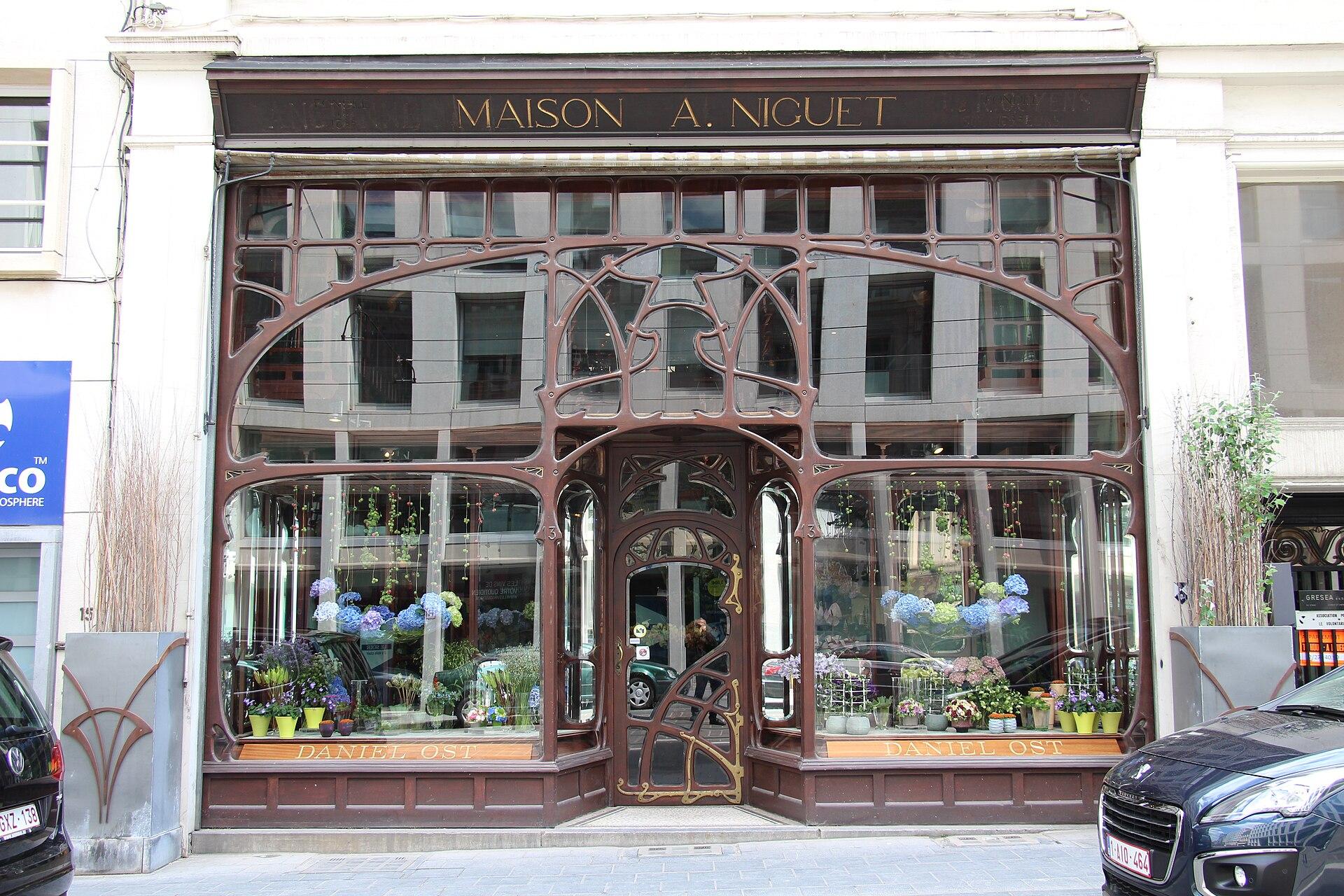
Ancienne chemiserie Niguet
“Maison fondée en 1835” (“House founded in 1835”): the Niguet shirt shop wanted its customers to read it in its decor. Yet in 1896 its owner ordered the newest shopfront on the street. He turned to Paul Hankar, one of the first Art Nouveau architects in Brussels.
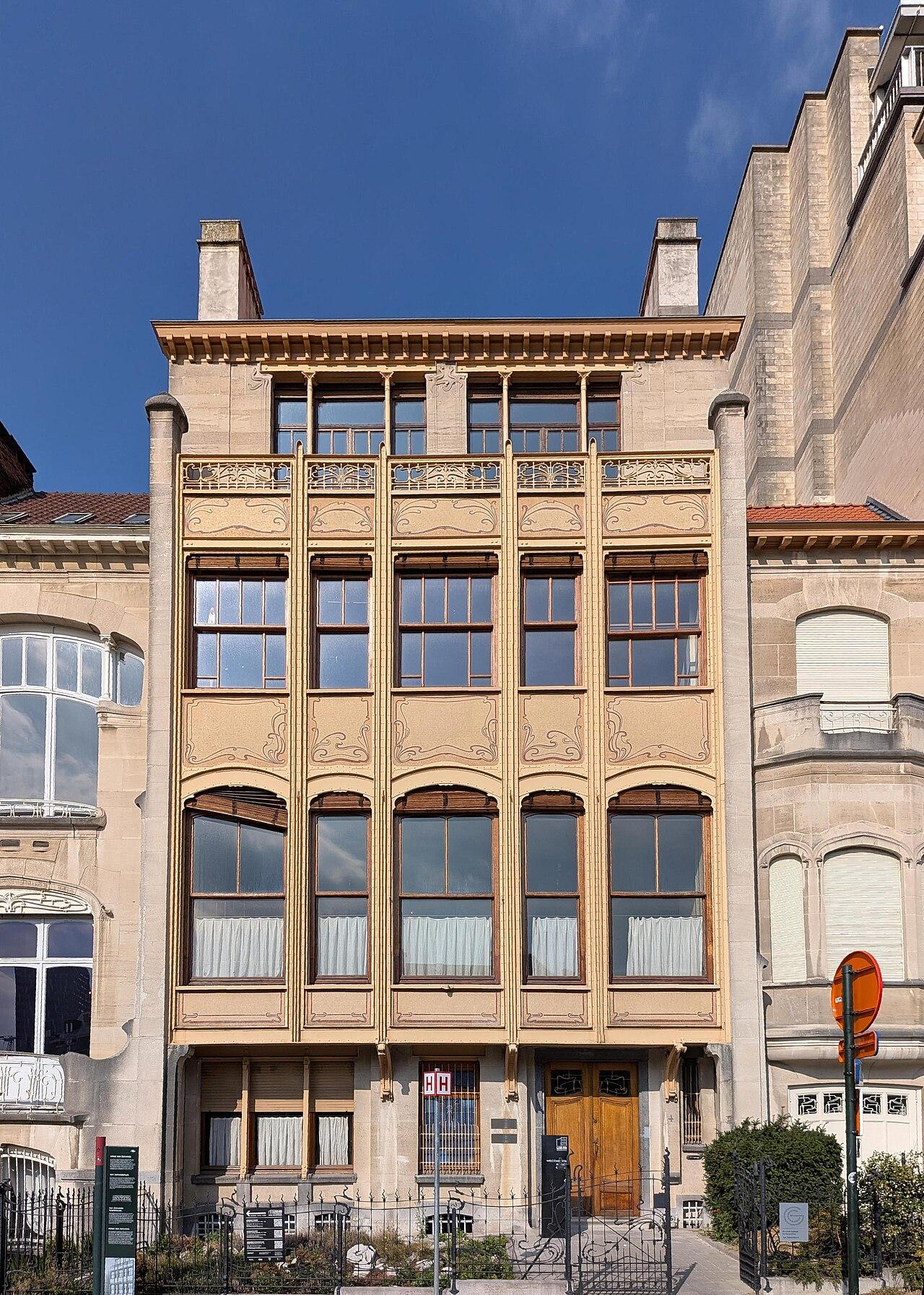
Hôtel van Eetvelde
For nearly a century, the large desk of Edmond van Eetvelde was missing from the room it had been made for. Old photographs showed exactly where it stood, among the woodwork designed by Victor Horta. In 2025, the piece came back, lent by a Dutch collector.
Open to visitors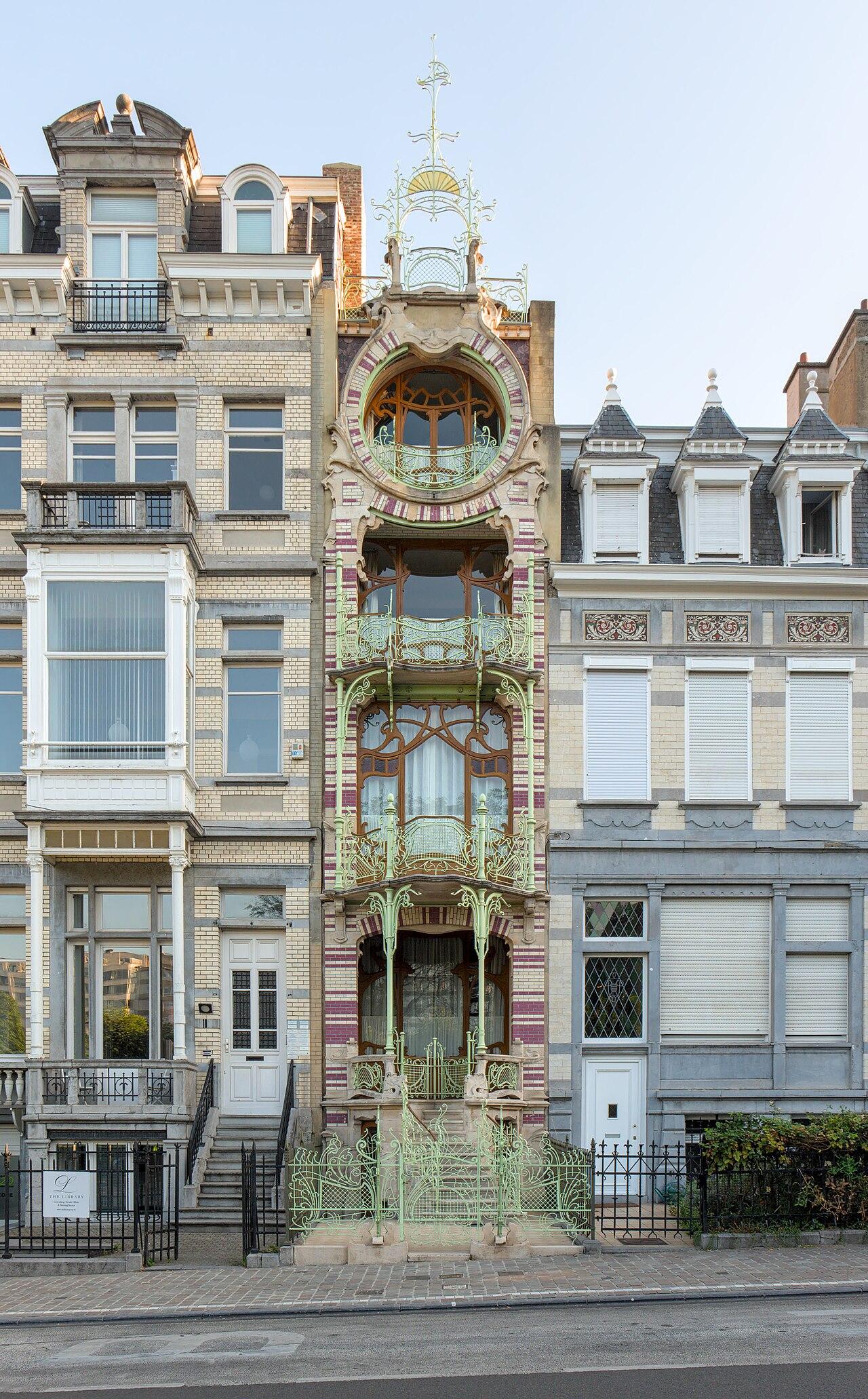
Maison Saint-Cyr
Four meters wide, barely. On Square Ambiorix, the Maison Saint-Cyr occupies a plot that a cautious architect might have found discouraging. Gustave Strauven turned it into one of the boldest façades in Brussels: a stack of balconies, loggias and ironwork that seems to want to gain in height what the lot denies it in width.
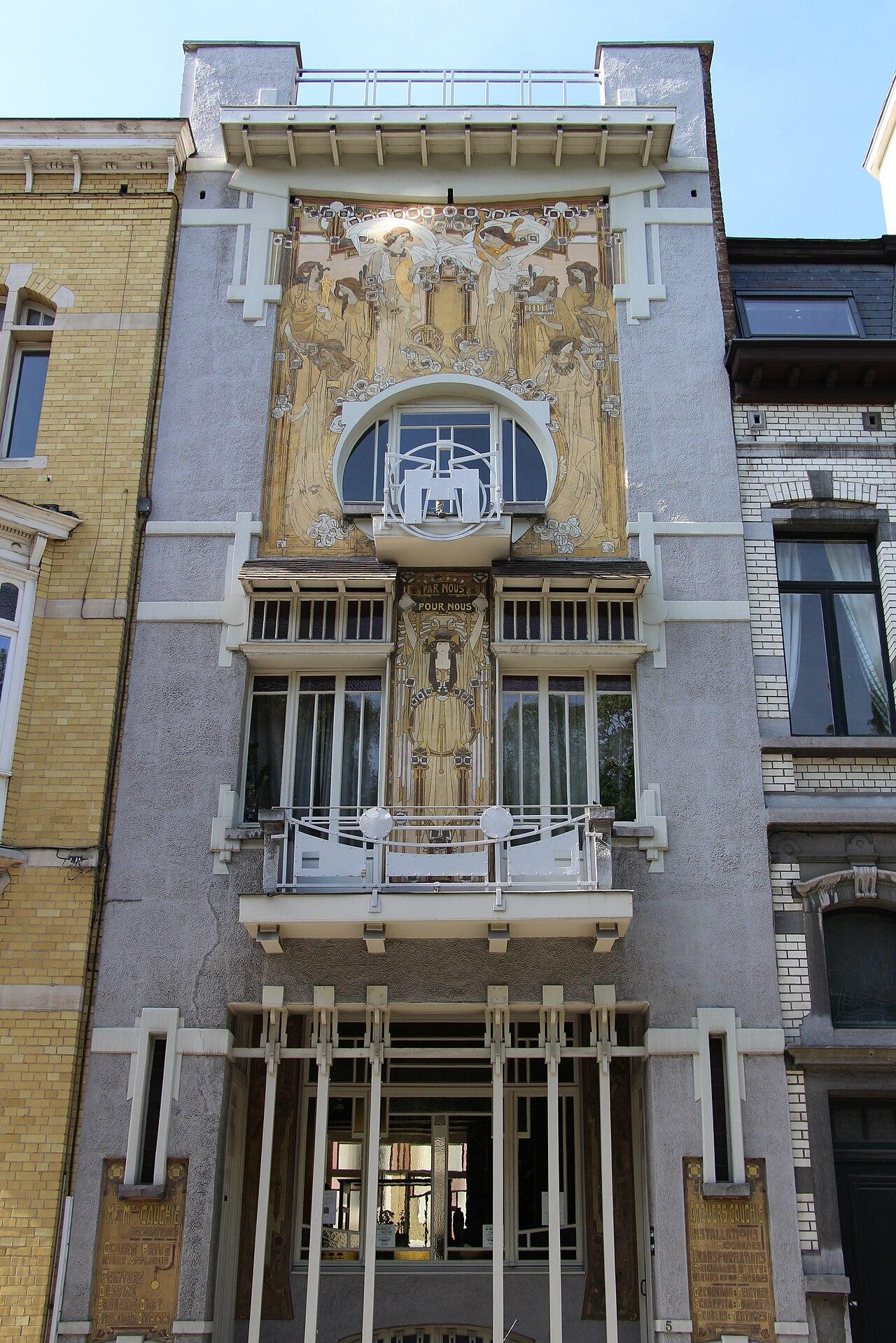
Maison Cauchie
“PAR NOUS / POUR NOUS” (“by us / for us”). The motto is written on the façade, and it tells the truth: Paul and Lina Cauchie designed, decorated, and lived in this house. In 1905, the couple were not just looking for a roof. They wanted to show their work to a city that might become their clientele.
Open to visitors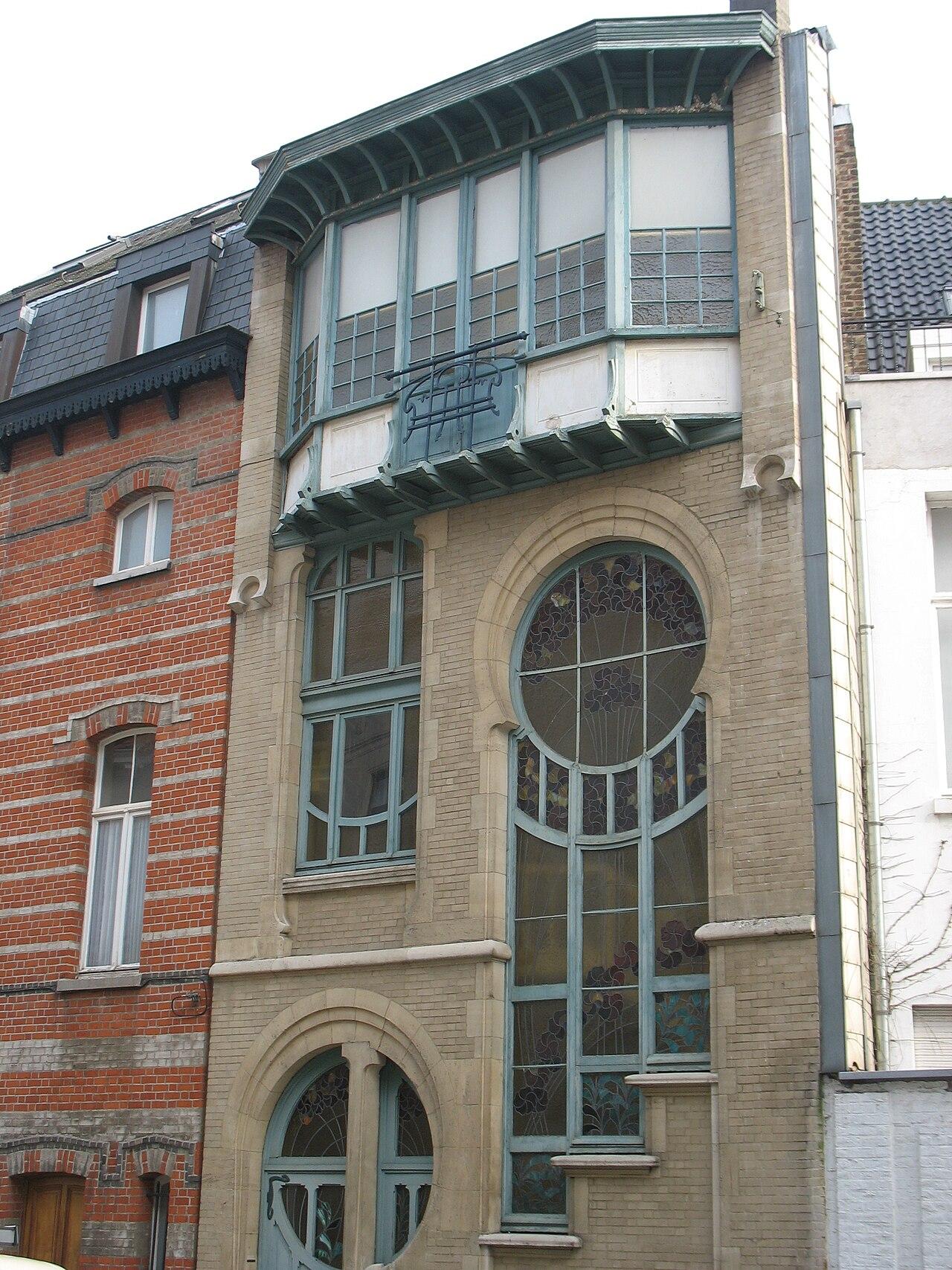
Maison Sterner
A master glassmaker needs light above all. Clas Grüner Sterner had set up his studio at the very top of the house, behind a wide three-sided window that juts out over the street to catch the daylight. His name stayed with the building, which did not owe its birth to him, however.
Maison Hannon
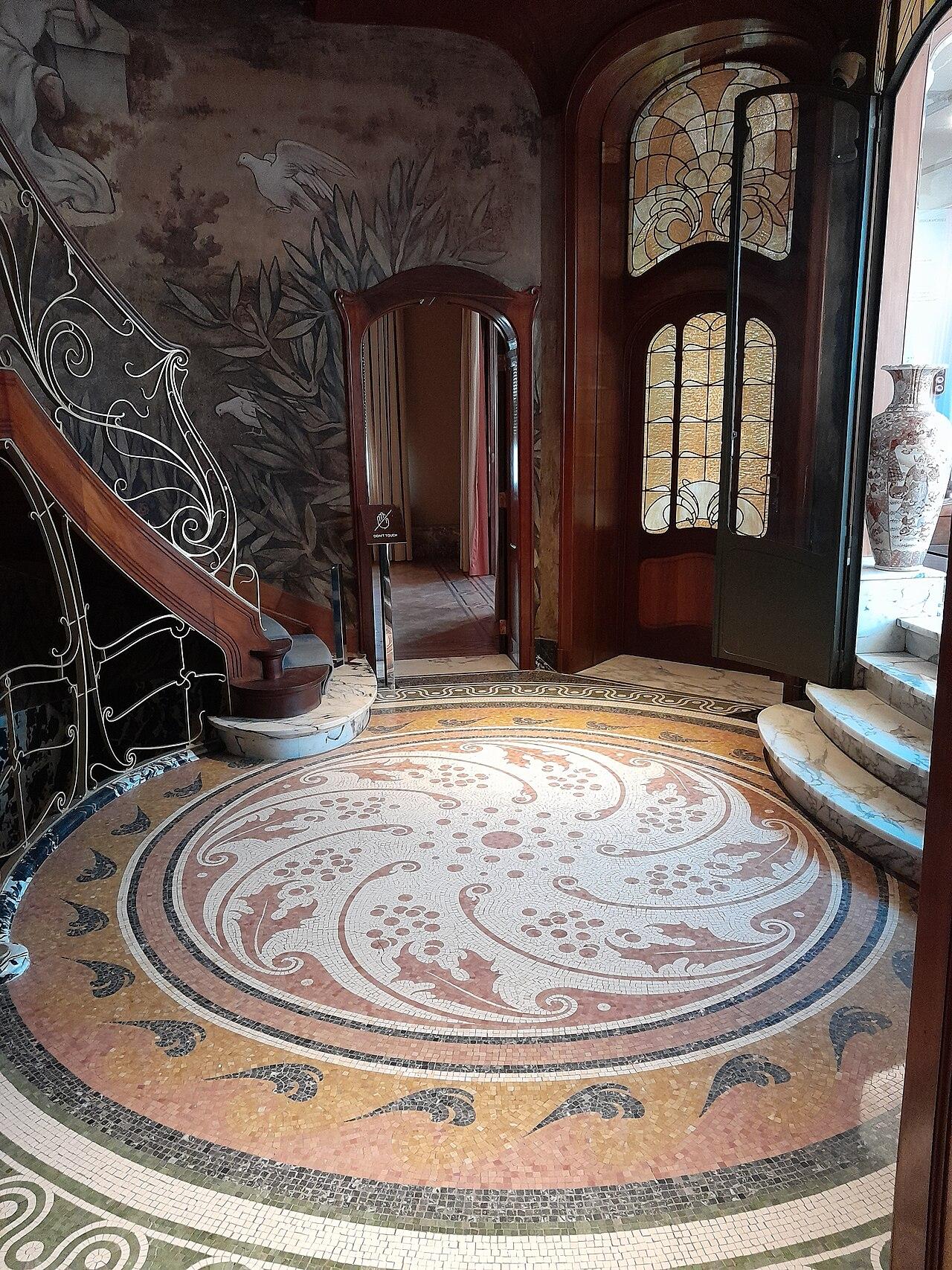
Jules Brunfaut designed only one Art Nouveau house. He drew it for a childhood friend, Édouard Hannon, an engineer at Solvay, who loved the style and asked him for it.
Open to visitors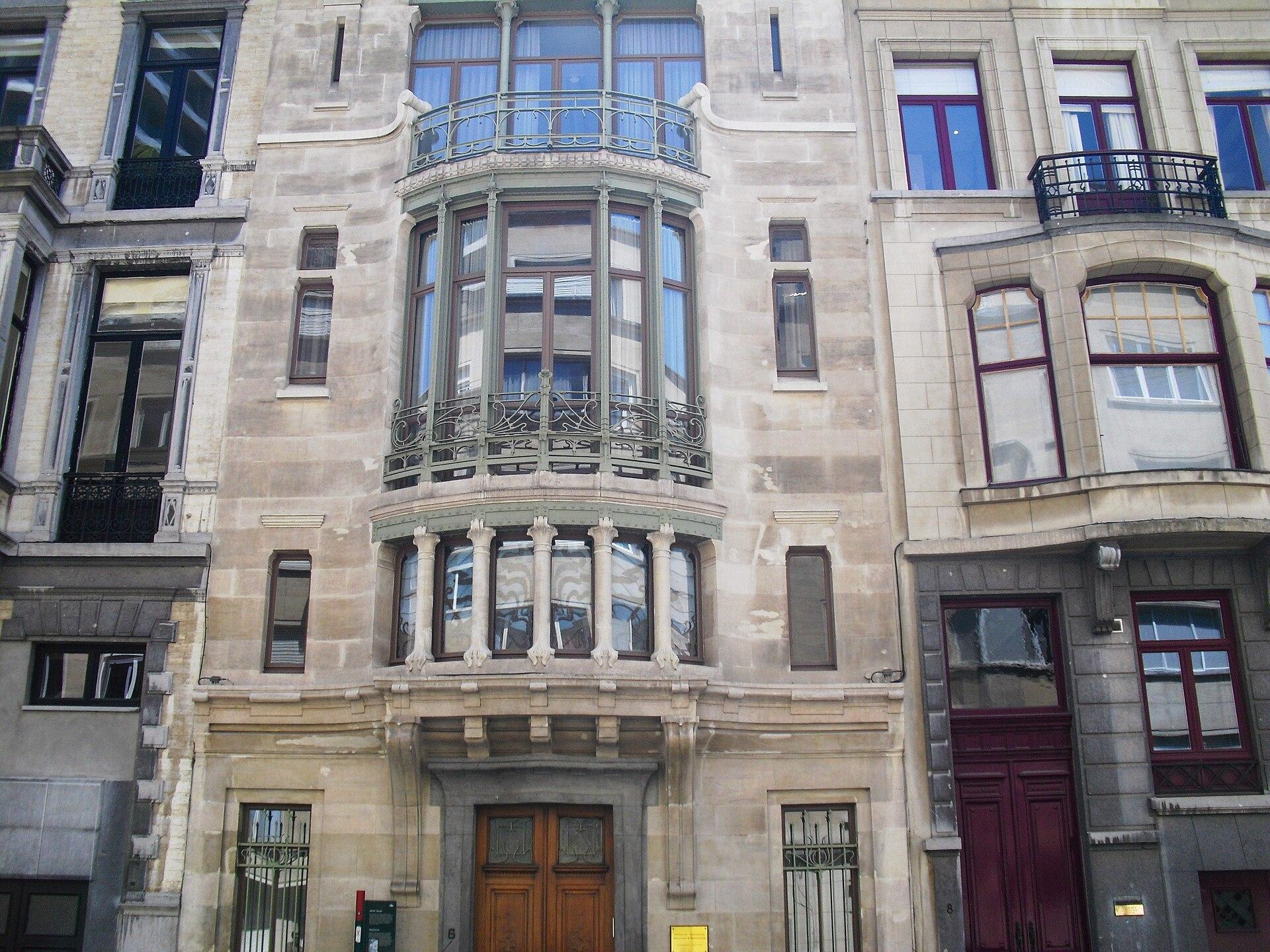
Hôtel Tassel
Émile Tassel taught descriptive geometry at the university, lived with his grandmother, loved entertaining friends and carried on his research at home. In 1893, he asked Victor Horta for a house that could hold all these lives at once, on a narrow, deep plot. The architect’s answer would change the way a house is drawn.
Occasional visits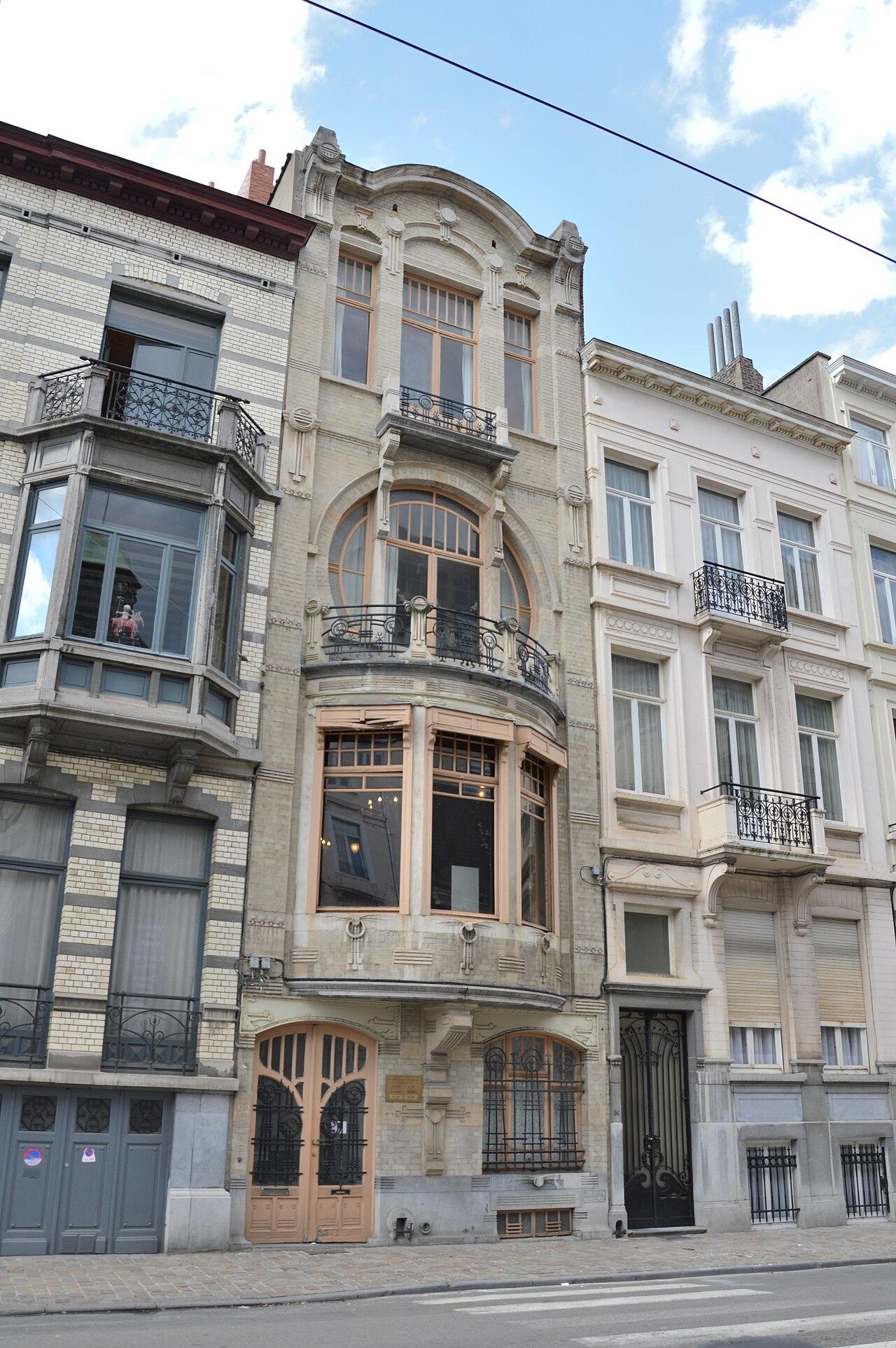
Maison de Lestre
At Rue Africaine 92, one detail can easily escape a passerby: a signature carved almost at ground level, “de Lestré / Archte” (“de Lestré / Architect”). The architect Benjamin de Lestré de Fabribeckers left his name where people rarely look. His façade deserves the same attention to quiet things. From a distance it seems restrained; up close, it reveals a meticulous design.
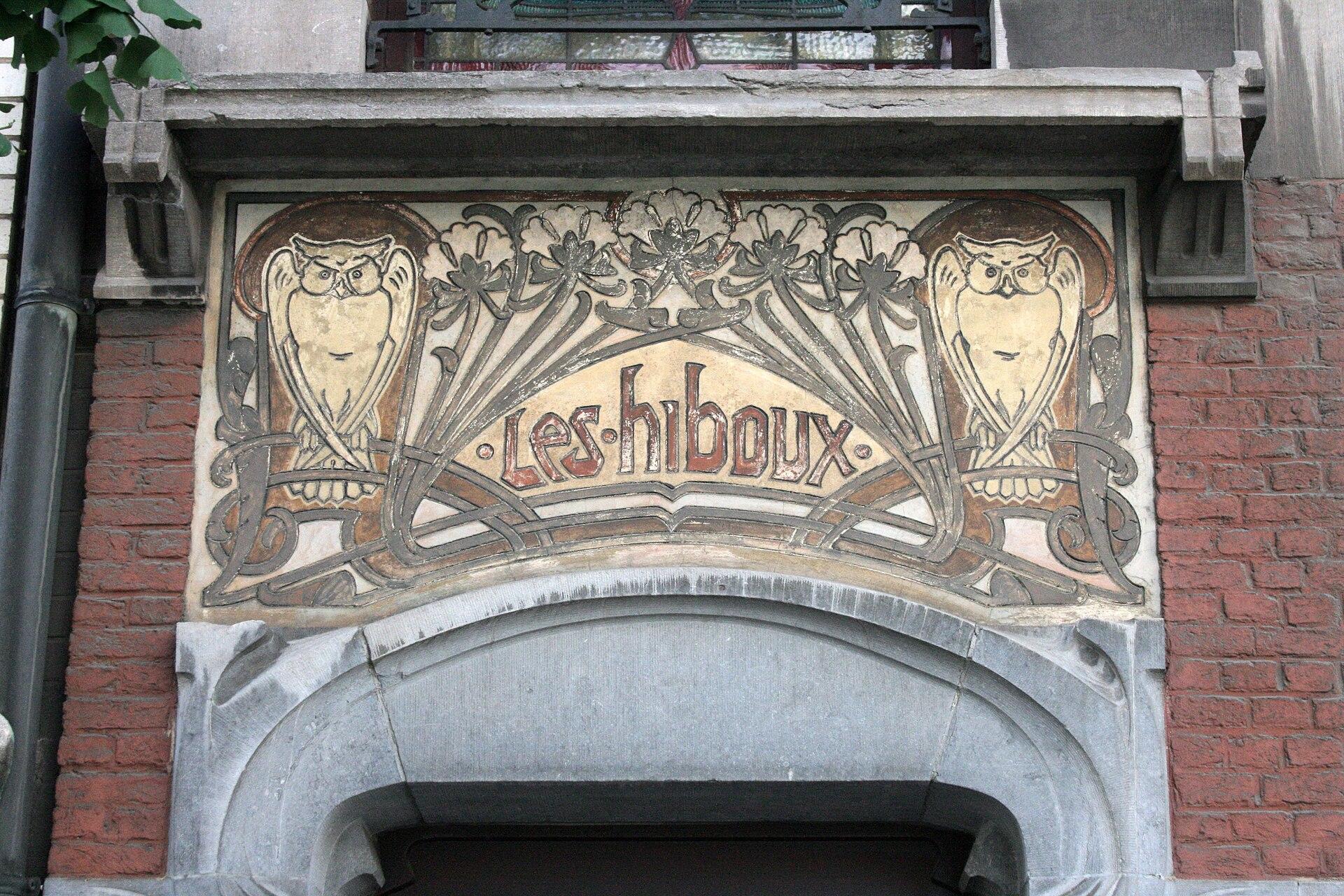
Maison Les Hiboux
Two owls of blue limestone watch over the avenue from the top of the façade. Lower down, above the door, two more frame the name of the house, traced in a golden sgraffito. They are still at their posts. Behind them, the house of 1899 no longer exists.
WalksAll walks →
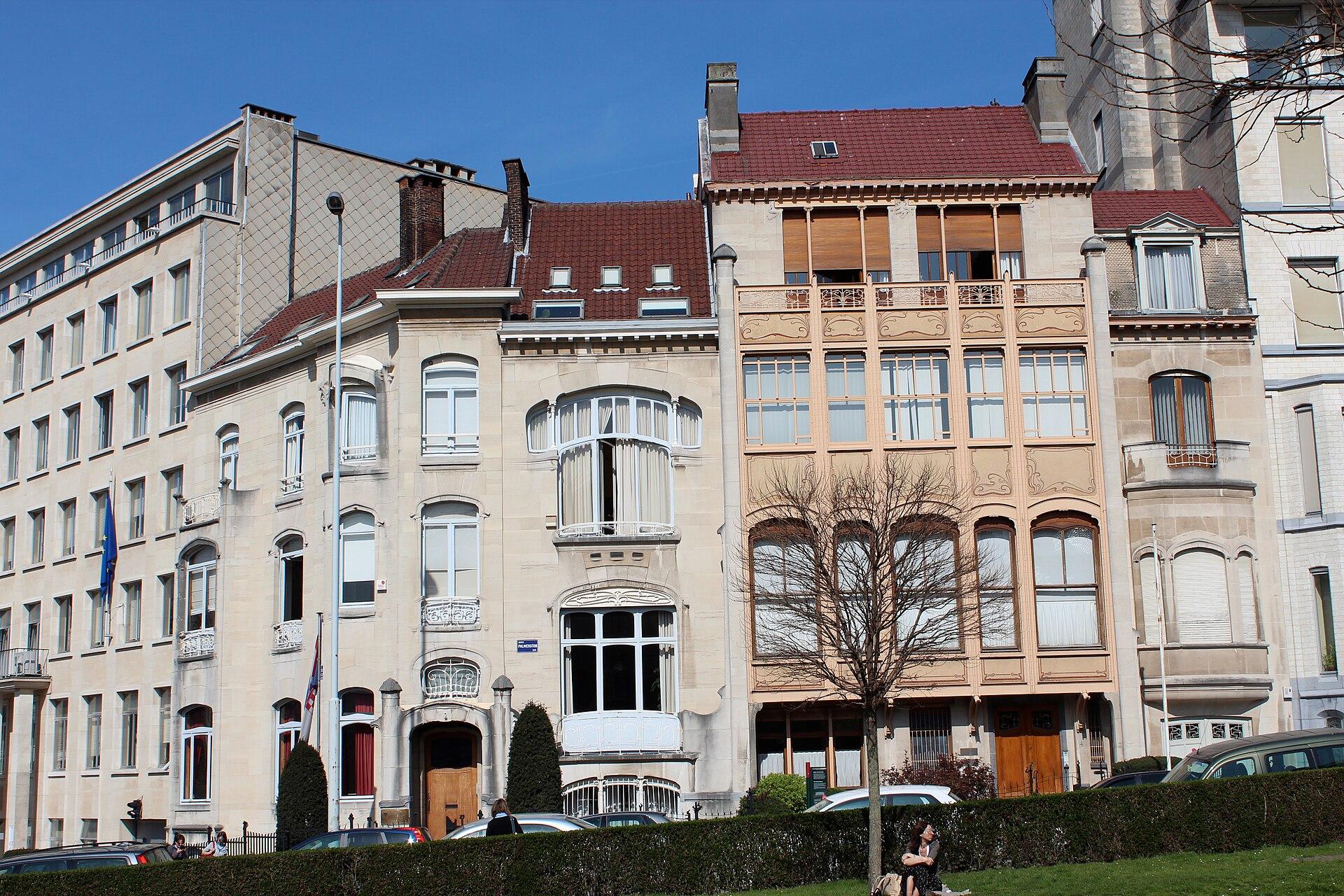
8 stops · ≈ 9.3 km · ≈ 3 h 15
Eight Art Nouveau facades
A desk missing for nearly a century, owls guarding a house that is no longer there, a signature carved at pavement level: eight facades, eight stories to read from the street.
3 stops · ≈ 2 km · ≈ 45 min
From the squares to the Cauchie House
A facade four metres wide, a desk back in its place in 2025, a motto spelled out on the front: three neighbouring houses in under an hour.
5 stops · ≈ 2.2 km · ≈ 1 h 15
Ixelles and Saint-Gilles
A glassmaker working under the roof to catch the daylight, a geometry professor who lived with his grandmother, an architect who designed only one Art Nouveau house: five doors between Ixelles and Saint-Gilles.
- + Build my ownPick your places, the order works itself out.